The Farm Store




We deliver product to Santa Fe every Wednesday from 12-1 PM.
To get on our delivery list, please email us.
Let's Talk PUFAs
Let's Talk PUFAs

What are PUFAs?
Before getting into why PUFAs can create problems, let’s slow down and talk about what they actually are.
Fat isn’t just “fat.” It’s made up of fatty acids, and the structure of those fatty acids determines how they behave in the body.
Some fats are very stable. These are saturated fats — the kinds found in foods like butter and animal fats. Because of their structure, they don’t easily break down when exposed to heat, light, or oxygen.
Monounsaturated fats, like olive oil, are slightly less stable but still fairly resilient.
Polyunsaturated fats (PUFAs), however, have a more fragile structure. They contain multiple weak points in their chemical makeup, which makes them much more likely to break down and oxidize — especially when exposed to heat and light. When fats oxidize, they can create inflammation and interfere with how our cells produce energy and regulate hormones.
The issue isn’t that PUFAs exist — it’s that modern diets are overloaded with them, largely because most animals are fed corn- and soy-based feeds, and seed oils are everywhere.

PUFAs On The Rise
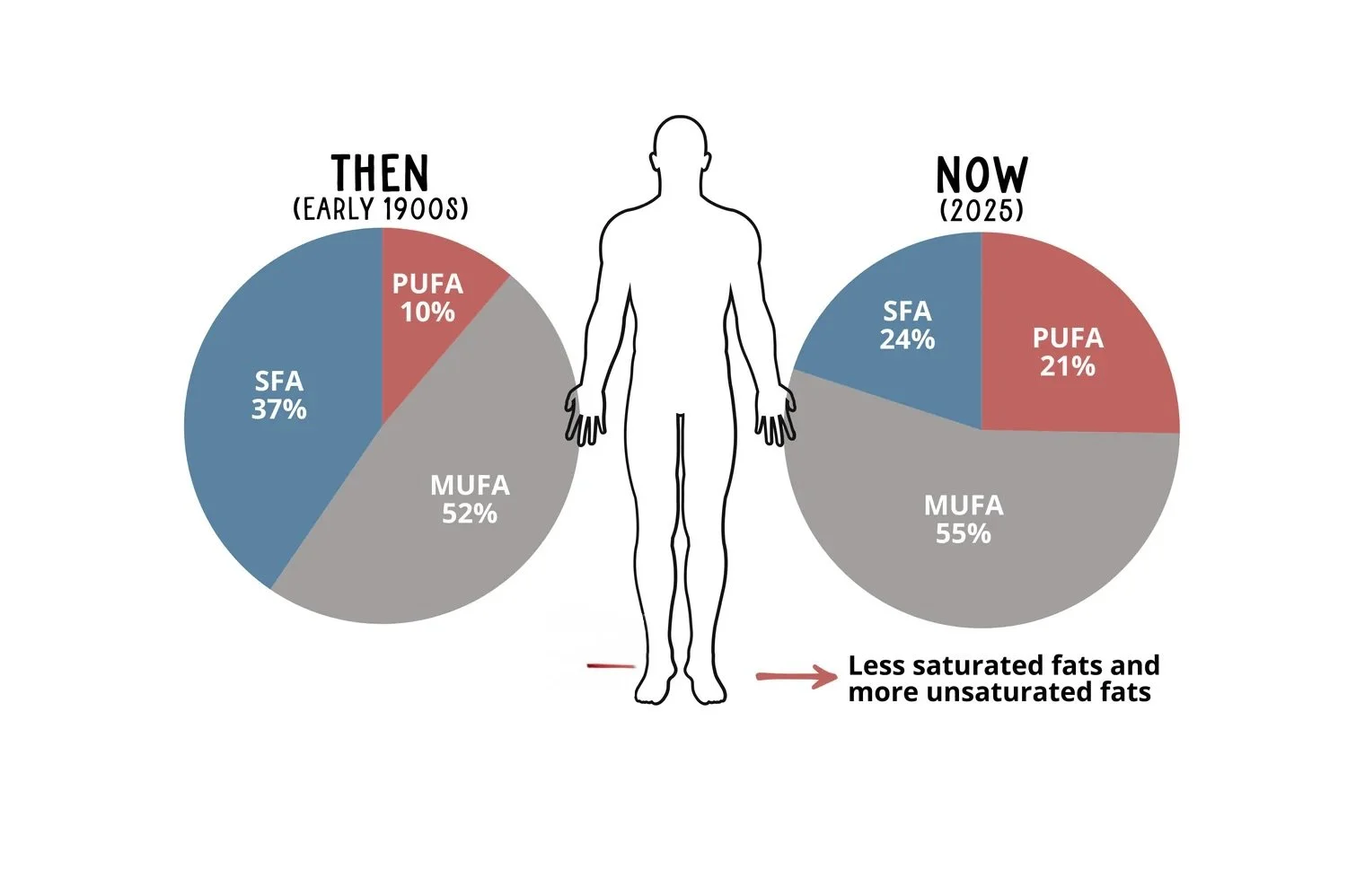
In 1900, plant-based PUFAs made up just 1–2% of daily calories. Today, they account for 15% or more — a dramatic increase that parallels rising rates of metabolic dysfunction and chronic disease. This shift matters because dietary fat doesn’t just fuel us — it becomes part of our cells, influences hormone signaling, and shapes how we produce energy. When we change the fats we eat, we change how our bodies function.
And it’s not just about what we eat — it’s about what our livestock eat. Animals that once consumed species-appropriate diets are now fed corn, soy, flax, and industrial byproducts rich in PUFAs. This has significantly altered the fat composition of pork, poultry, eggs, and even dairy, increasing their PUFA content.
In other words, even if you avoid seed oils, you may still be consuming high levels of PUFAs hidden in conventional meat and eggs — simply because of how the animals were fed.
Health Consequences of a High PUFA Diet
Slows metabolic rate
Lowers energy levels
Increases infertility rates
Disrupts hormonal balance
Promotes weight gain & increases obesity risk
Elevates stress levels
Increases cellular damage
Faster skin damage & aging
Impairs gut health
Weakens the immune systems
Impairs our ability to use carbohydrates
Alters the types of fat stored in your body
Changes the fat composition of breast milk
We’re Love Providing
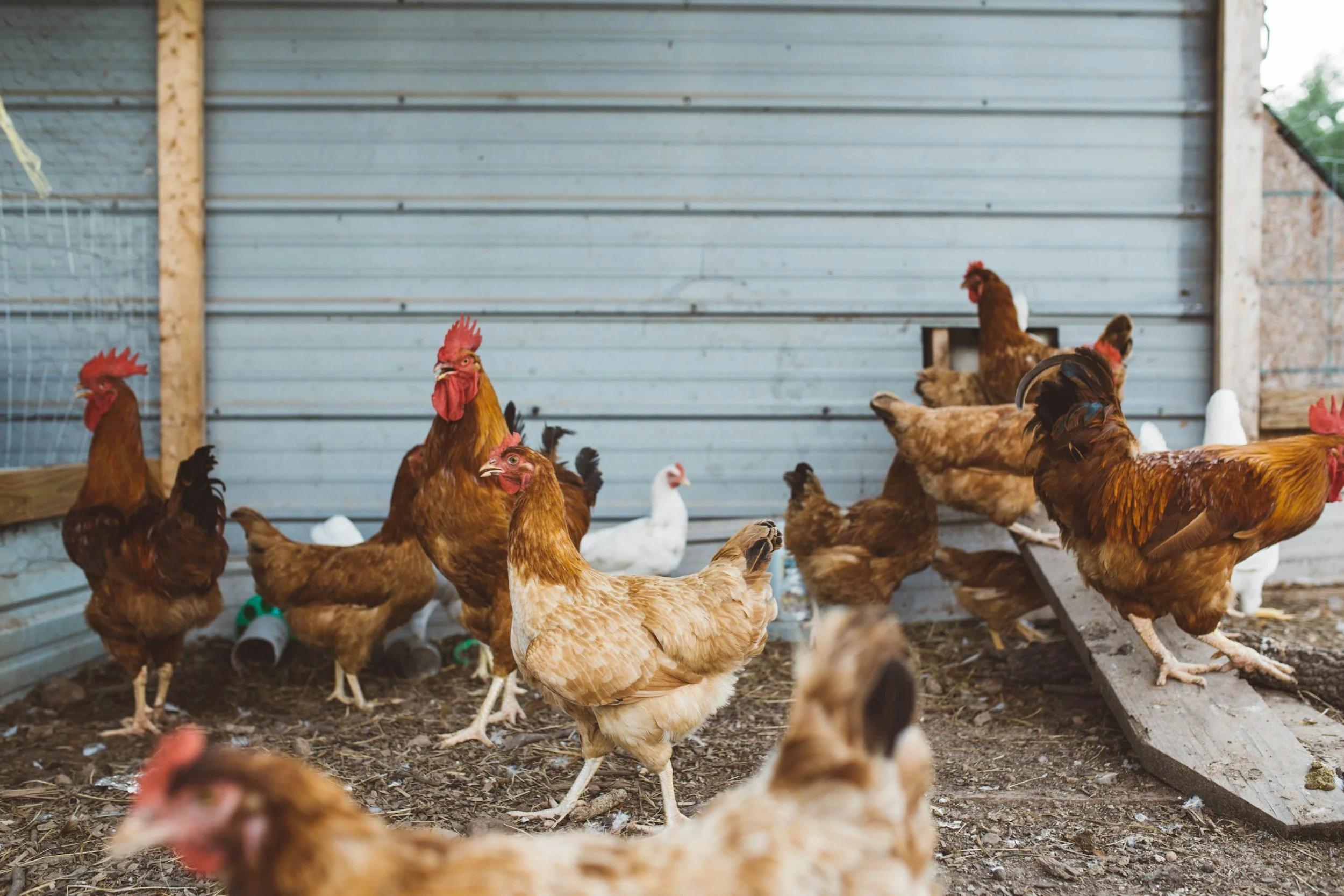
Low PUFA Eggs For Our Community